NUCLEAR SCIENCE • 6 MIN READ
Next-Gen Compact Fusion Reactors
How magnetic confinement tokamaks are approaching net positive plasma energy output in 2026.
Initializing Accelerator Core...
LOADING CERN QUANTUM SIMULATION SYSTEM
Enter a high-energy particle research facility. Walk inside interactive atoms, simulate nuclear fission and fusion, and visualize quantum mechanics in real-time 3D.
PARTICLE ENERGY
13.6 TeV
ACTIVE ELECTRONS
1.2 × 10⁸
STABILITY INDEX
99.98%
CONTAINMENT FIELD
OPTIMAL
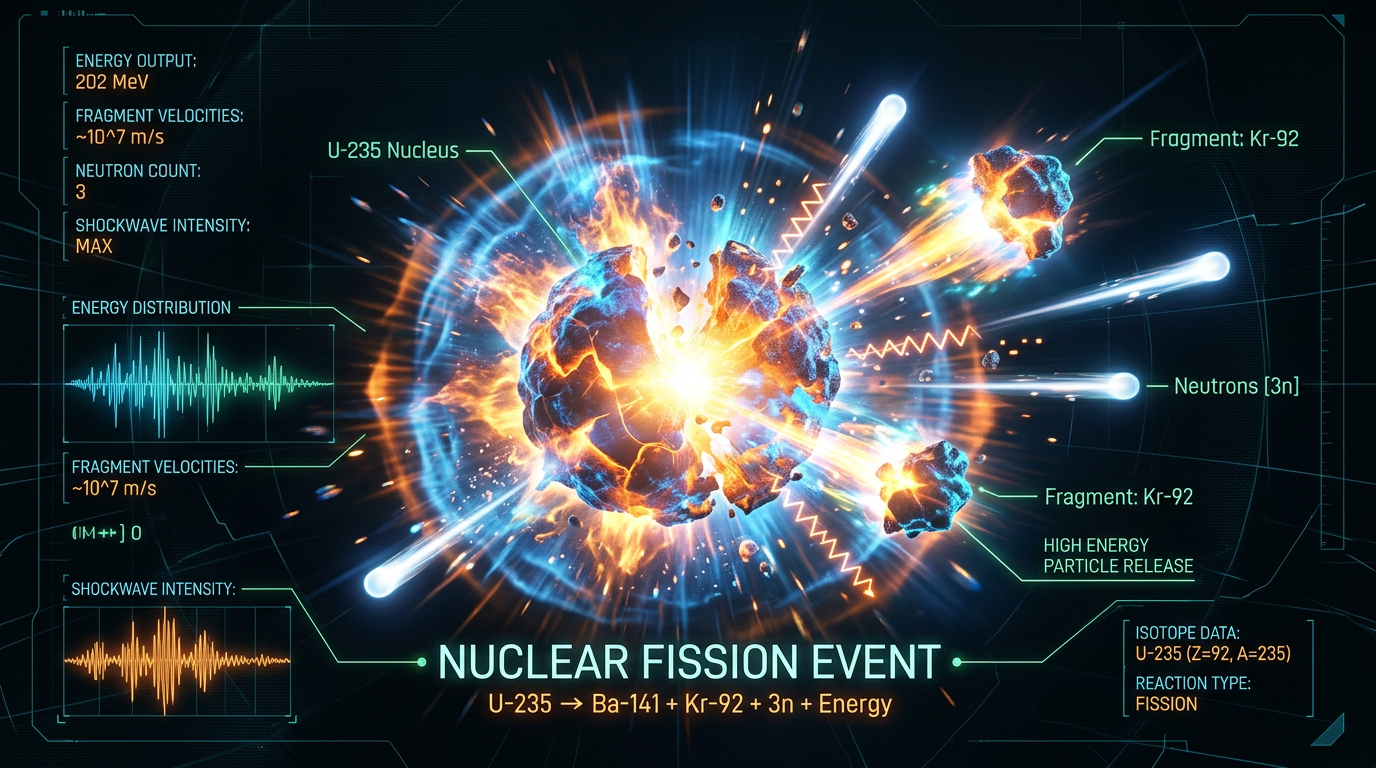
Watch an incoming high-energy neutron collide with a heavy Uranium nucleus, triggering instability and a powerful energy cascade.
Hover and inspect key elements to analyze electron configurations and atomic properties.
Hydrogen
Carbon
Uranium
Oxygen
Gold
Plutonium
Construct molecular bonds in real-time. Break single and double chemical bonds, observe electron sharing, and analyze 3D geometry of essential compounds.
Polar covalent covalent bond, 104.5° angle
Tetrahedral structure, 109.5° angle
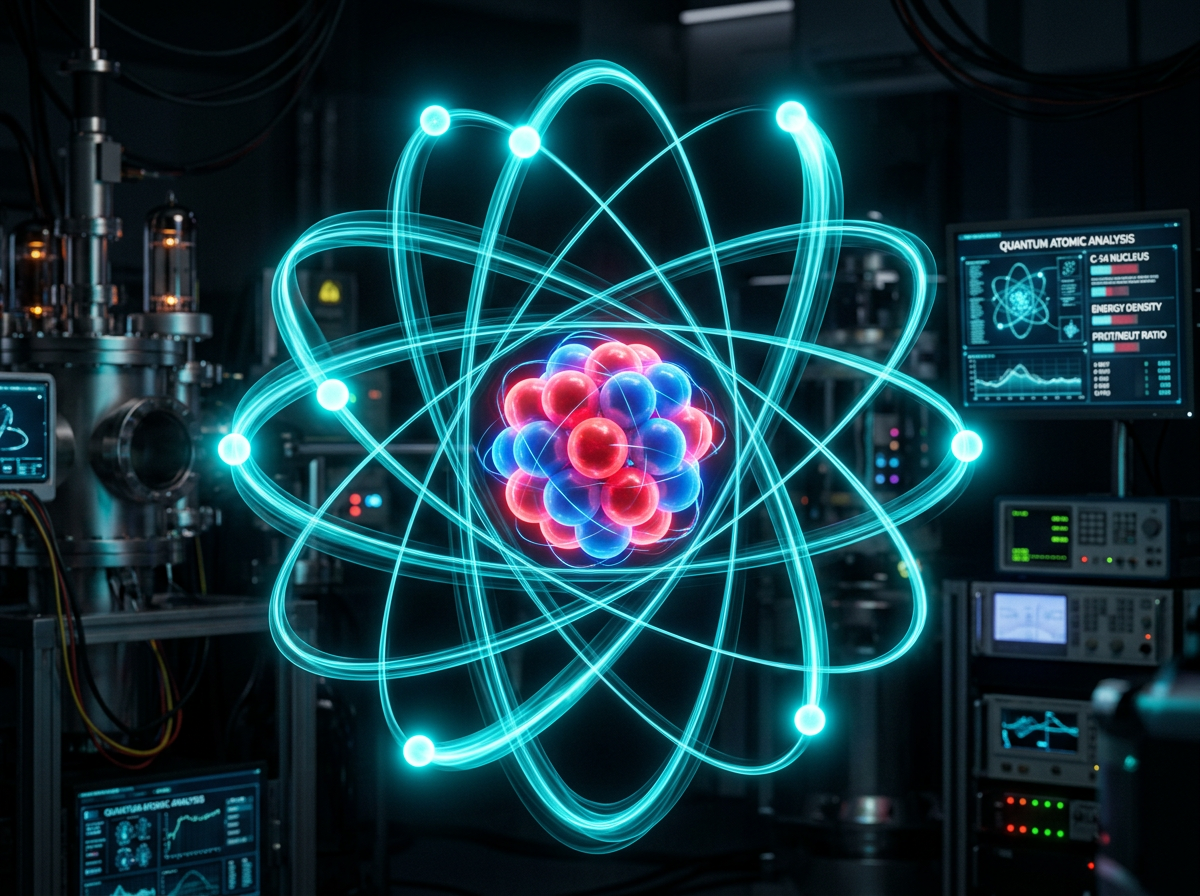
Active 3D Bonding State Engine • Drag to rotate view
Cathode ray experiments proved atoms were divisible into smaller charged subatomic particles.
Gold foil experiment demonstrated that atomic mass is concentrated in a dense positive nucleus.
Proved heavy atomic nuclei could split into smaller fragments, releasing immense nuclear energy.
How magnetic confinement tokamaks are approaching net positive plasma energy output in 2026.
Understanding Schrödinger wave equations and quantum superposition in molecular orbital theory.
Analyzing lattice structures and Cooper pairs in newly synthesized hydrides under pressure.
Get direct notifications for live accelerator test runs, interactive molecular simulations, and CERN educational resources.