Look Up. The Universe Is Moving.
Discover why the Sun disappears, why the Moon changes shape, and what really happens during an eclipse. Every planet you see below is really moving — just like it does in space.
Built for kids ages 7–14, trusted by parents and teachers for accurate, screen-worthy science.
🖱️ Drag to explore the Solar System
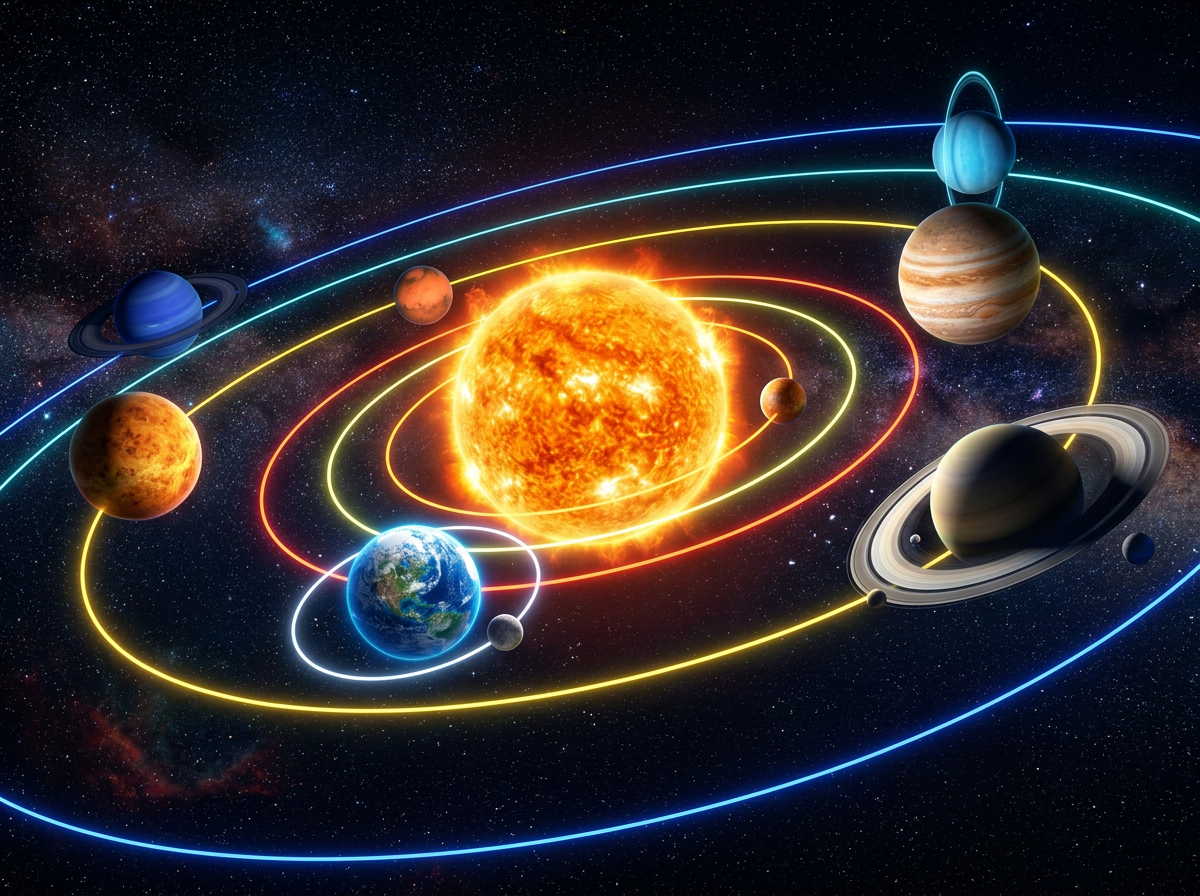
Take the Wheel of the Solar System
This isn't a picture — it's a living scene you control. Drag to rotate, pinch or scroll to zoom, and hover over any planet to see it come alive.
Rotate the View
Click and drag anywhere in the scene to spin around the Sun and see planets from every angle, just like an astronaut looking out a window.
Zoom In Close
Get close enough to see Saturn's rings shimmer or watch tiny comets streak past in the background — details a photo could never show.
Click to Discover
Every planet responds to a click. Tap one and it lights up with a short, fascinating fact — no reading walls of text required.
Illustrative visualization — planet sizes and distances are adjusted for visibility and are not to scale.
Hover Over a World, Meet Its Personality
Every planet has its own story. Hover in the scene above and a compact card pops up instantly — short, punchy, and impossible to forget.
EARTH
Our home planet 🌍
MARS
The Red Planet 🔴
SATURN
Famous for its rings 🪐
Clicking feels responsive and delightful — planets pulse gently with a soft glow the moment your cursor arrives, then settle into a short info card that answers "what is that?" in one line.
Illustrative visualization — not to scale.
Meet Your Cosmic Neighbors
Eight planets orbit our Sun, and every single one has a personality of its own. This section is your first stop on a journey past all eight — before diving deeper on the Eclipses and Explore pages.
Scroll through the horizontal planet journey below. Each world shows its animated visual, a fun fact, and a relative size clue so you start building real intuition about our Solar System.
Mercury
Smallest planet, closest to the Sun
Venus
Hottest planet in the Solar System
Earth
The only known home for life
Mars
Home to the tallest volcano known
Jupiter
Largest planet in our Solar System
Saturn
Rings made of ice and rock
Uranus
Spins on its side, unlike any other
Neptune
Farthest planet, fastest winds known
Not All Planets Are Created Equal
Look closely at the circles above — their sizes hint at real differences. Jupiter could swallow more than a thousand Earths. Mercury is barely bigger than our Moon.
Size clues help you build a mental map before you ever touch a textbook. When something feels big or small, it sticks in memory far longer than a number on a page.
Relative Size, Smallest to Largest
- MercurySmallest
- MarsSmall
- VenusEarth-sized
- EarthEarth-sized
- NeptuneLarge
- UranusLarge
- SaturnGiant
- JupiterLargest
Click a Planet, Fly Right Toward It
When you tap a planet in the journey above, the camera doesn't just jump — it glides smoothly toward that world, like a spaceship easing into orbit.
Smooth Camera Travel
The zoom takes about a second — long enough to feel like real travel, short enough to keep the experience fast and fun.
A Panel Pops Open
Once you arrive, a "Did You Know?" panel appears with one memorable fact — never a paragraph, always a spark.
Fly Home Anytime
Close the panel and the camera eases back out, ready for your next destination — no reloads, no waiting.
Something Amazing Happens...
Watch the Sun, Earth, and Moon line up in ways that create two of the most dramatic sights in the sky.
The Moon slides between the Sun and Earth, and its shadow races across our planet.
Earth slides between the Sun and Moon, and our own shadow paints the Moon red.
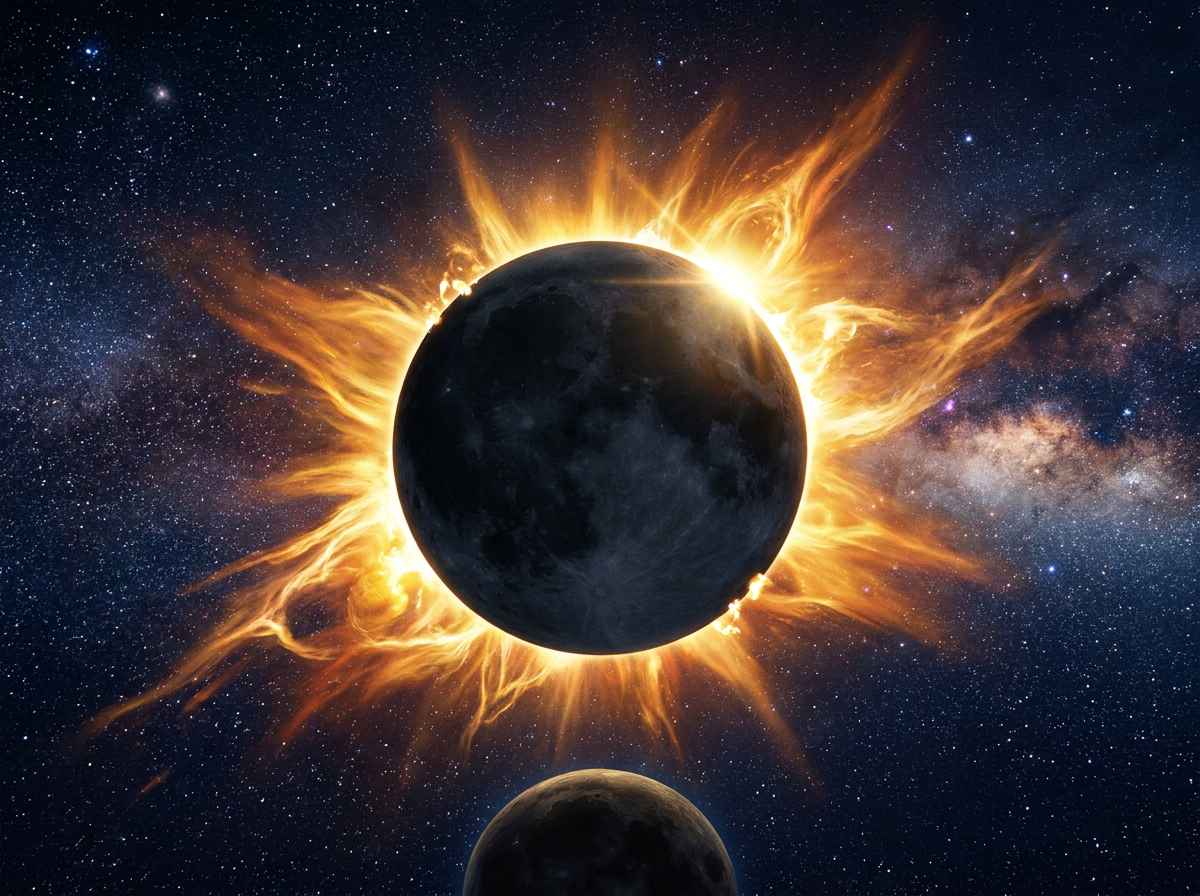
Solar Eclipse: The Day the Sky Goes Dark
The Moon moves directly between the Sun and Earth, blocking some or all of the Sun's light for a few dramatic minutes.
It's rare, it's stunning, and it happens because three moving objects line up in space. On the Eclipses page you'll control that alignment yourself.
See how the alignment works on EclipsesLunar Eclipse: When Earth Casts the Shadow
This time Earth moves between the Sun and Moon, and Earth's own shadow falls across the Moon's glowing face.
The Moon often turns a deep red — sometimes called a "Blood Moon" — because of the way sunlight bends around Earth's atmosphere. You'll see exactly why on the Eclipses page.
Control the Moon's shadow on Eclipses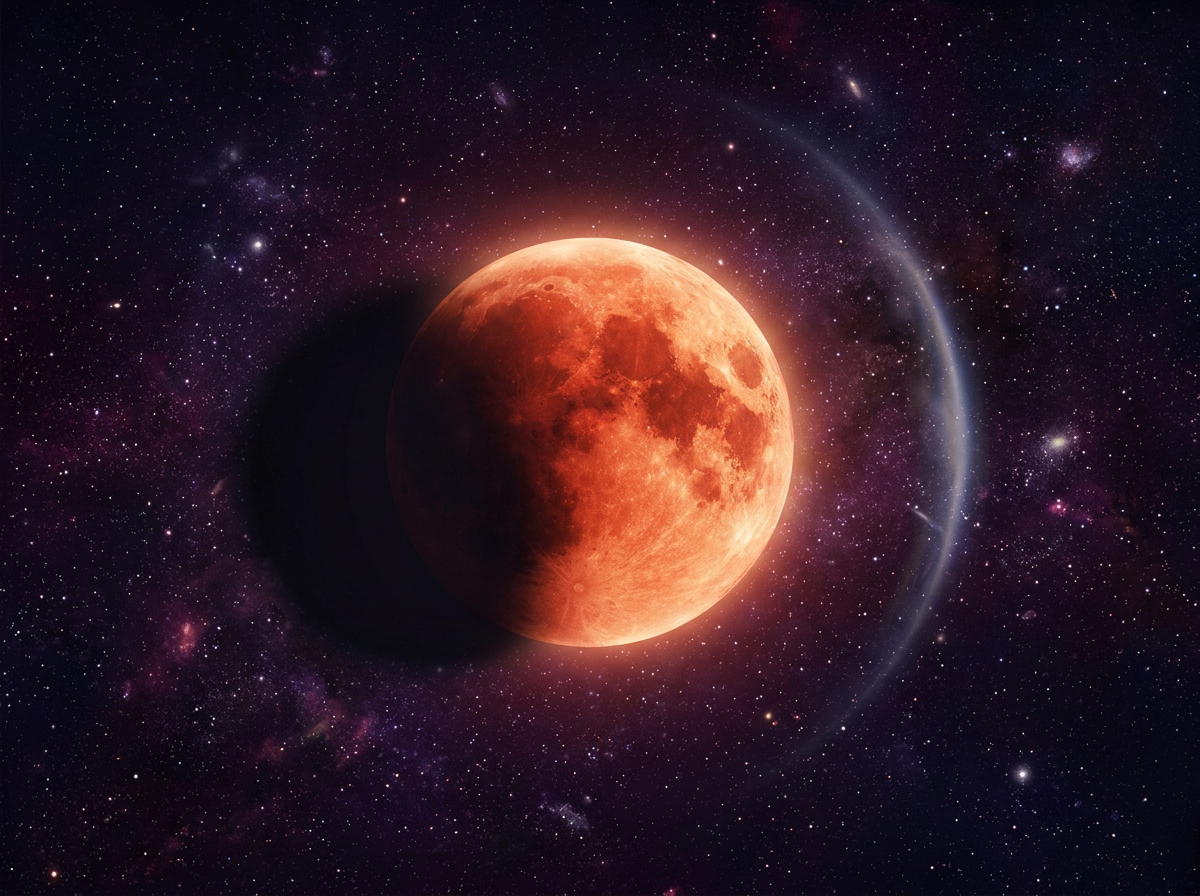
Two Shadows. One Simulator That Explains Both.
The full eclipse simulator lets you push a slider, pick a mode, and watch the shadow fall in real time — no guessing, no memorizing.
Your Universe Is Bigger Than You Think
Earth feels huge when you're standing on it. But zoom the camera out just a little, and it shrinks into one small blue dot among many.
Keep zooming and Earth disappears into the Solar System. Keep zooming again and the Solar System disappears into the Milky Way — one galaxy among billions.
Step One: Earth
Your home world, orbiting the Sun once every year.
Step Two: The Solar System
Eight planets, moons, and countless smaller objects, all circling our Sun.
Step Three: The Milky Way
Our entire Solar System is just one tiny piece of a galaxy holding billions of stars.
A Galaxy Field Waiting for You
The Milky Way is our galaxy — a vast swirl of stars, gas, and dust that our entire Solar System travels through. Scientists estimate it holds hundreds of billions of stars.
The Explore page turns this idea into a place you can actually fly through. It's the same feeling as the last few seconds of a movie pulling back to reveal the whole picture — except you're in control of the camera.
Fly into the Milky Way on ExploreAdventure Doesn't Mean Guesswork
Every scene in Eclipse Explorer is built to feel like play — but the science underneath never bends to make it flashier. Facts, fun facts, and simulations are always labeled clearly, so nobody mistakes a cartoon for a claim.
Fact
Astronomical information — like which planet is largest or what causes a shadow — comes from real, established science. Nothing here is invented for effect.
Interactive Simulation
When a scene isn't drawn to true scale — which is nearly always true for planet sizes and distances — we say so plainly, right on the page.
Built for Curious Kids. Trusted by the Grownups Watching.
For Young Explorers
Cinematic visuals, responsive clicks, and short bursts of discovery keep the experience exciting instead of exhausting.
For Parents
Educational content that's accurate, screen-worthy, and clearly labeled — so you know what your child is learning at a glance.
For Teachers
A visual teaching tool that shows eclipse mechanics more clearly than diagrams alone, usable on any classroom device.
One Universe, Every Screen
Desktop gives you the full cinematic experience — deep 3D scenes, smooth camera moves, and rich detail. But the wonder doesn't stop there.
On tablets and phones, scenes simplify automatically to stay smooth, and every interaction, fact, and CTA remains fully usable. If 3D isn't available on a device, a graceful illustrated fallback keeps the same story intact.
Desktop: full cinematic 3D scenes and camera movement
Tablet: simplified 3D intensity, same interactivity
Mobile: lightweight visuals, full educational content preserved
Ready to Chase the Shadow?
The next stop on your journey is the Eclipses page, where you'll control the Sun, Earth, and Moon yourself and watch solar and lunar eclipses unfold under your own hand.
Exactly three pages — Home, Eclipses, Explore — built for children ages 7–14, and trusted by the parents and teachers guiding them.